
October 2025 |
Windy roads, mountains, lakes – and that feeling that behind every bend lies not just a panoramic view, but a new story. Our eight-day tour of Slovenia takes us from the Swiss Alps to the Adriatic: along ancient Roman routes, through valleys each with their own distinct character, and into landscapes shaped by the First World War – all the way to the sea, where Venetian façades glow in the evening light.
The route serves as an example of what a tour might look like; the weather, roads and group will result in slight variations.
Day 1 – A taste of the Alps in Vinschgau & Lake Reschen
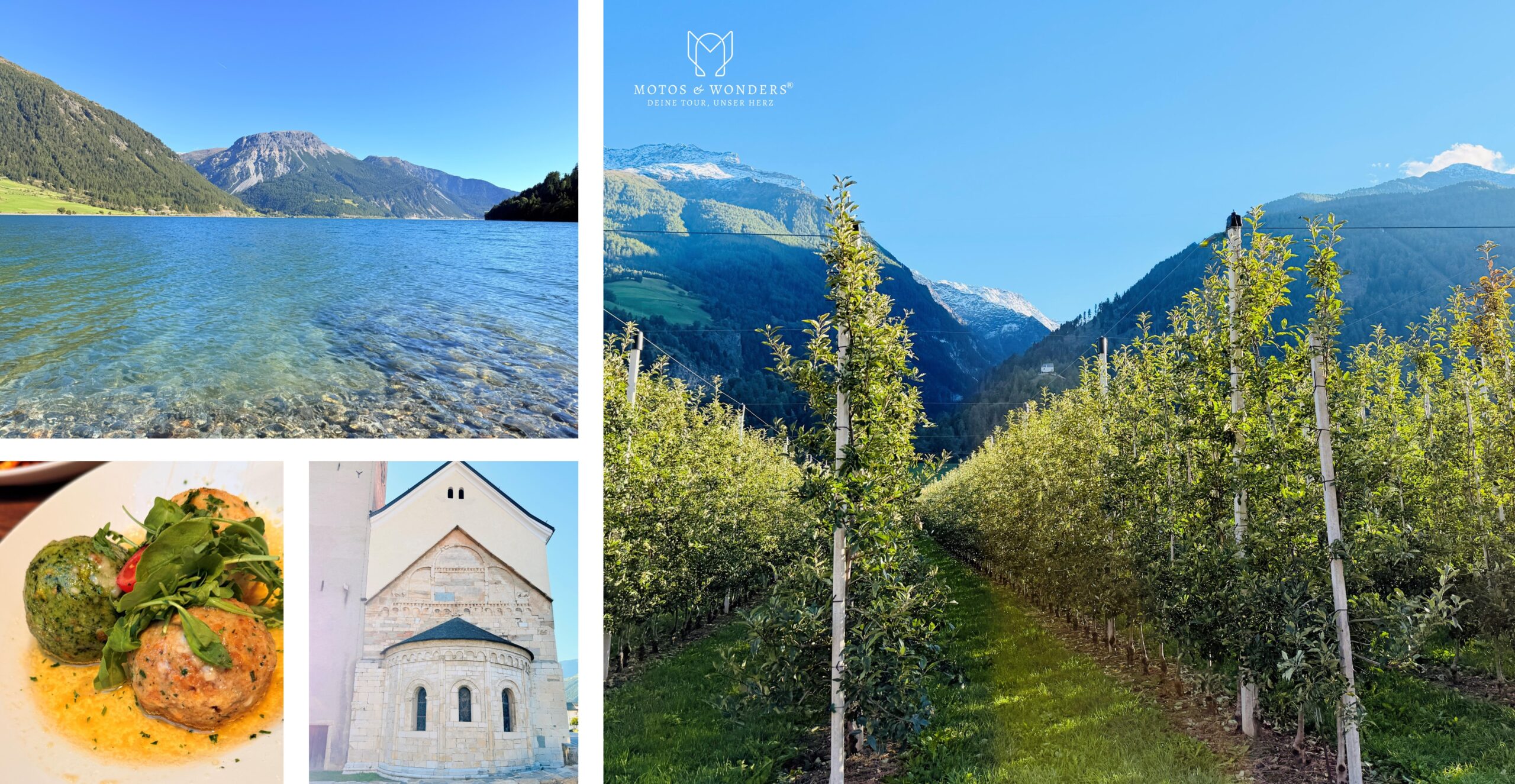
The engine purrs, the morning is clear, and mist still hangs over the Alps – the perfect start to our Alps-Adriatic motorbike tour towards South Tyrol. No sooner have you settled into the rhythm of the bends and the fresh air than it appears: this scene, which looks like a film still – the church tower on Lake Reschen, serene, iconic, a little surreal.
What looks like a postcard scene has a serious core: the reservoir was dammed in 1950 for hydroelectric power, entire settlements were flooded – and the tower remained as a visible witness. And as if that weren’t enough of a story, you’re travelling along one of Europe’s ancient lifelines: the Via Claudia Augusta, a Roman route across the Alps that connected trade, people and ideas between north and south.
In the evening we arrive in Vinschgau – apple orchards, the Adige, villages straight out of a painting. In Laas you come across Romanesque churches and that quiet South Tyrolean sense of ease: eat well, sleep well, carry on tomorrow. Dumplings, butter, a glass of wine to go with it – and you realise: your mind is already in travel mode.
Day 2 – Layers of Time: From Ladin valleys to Roman stones
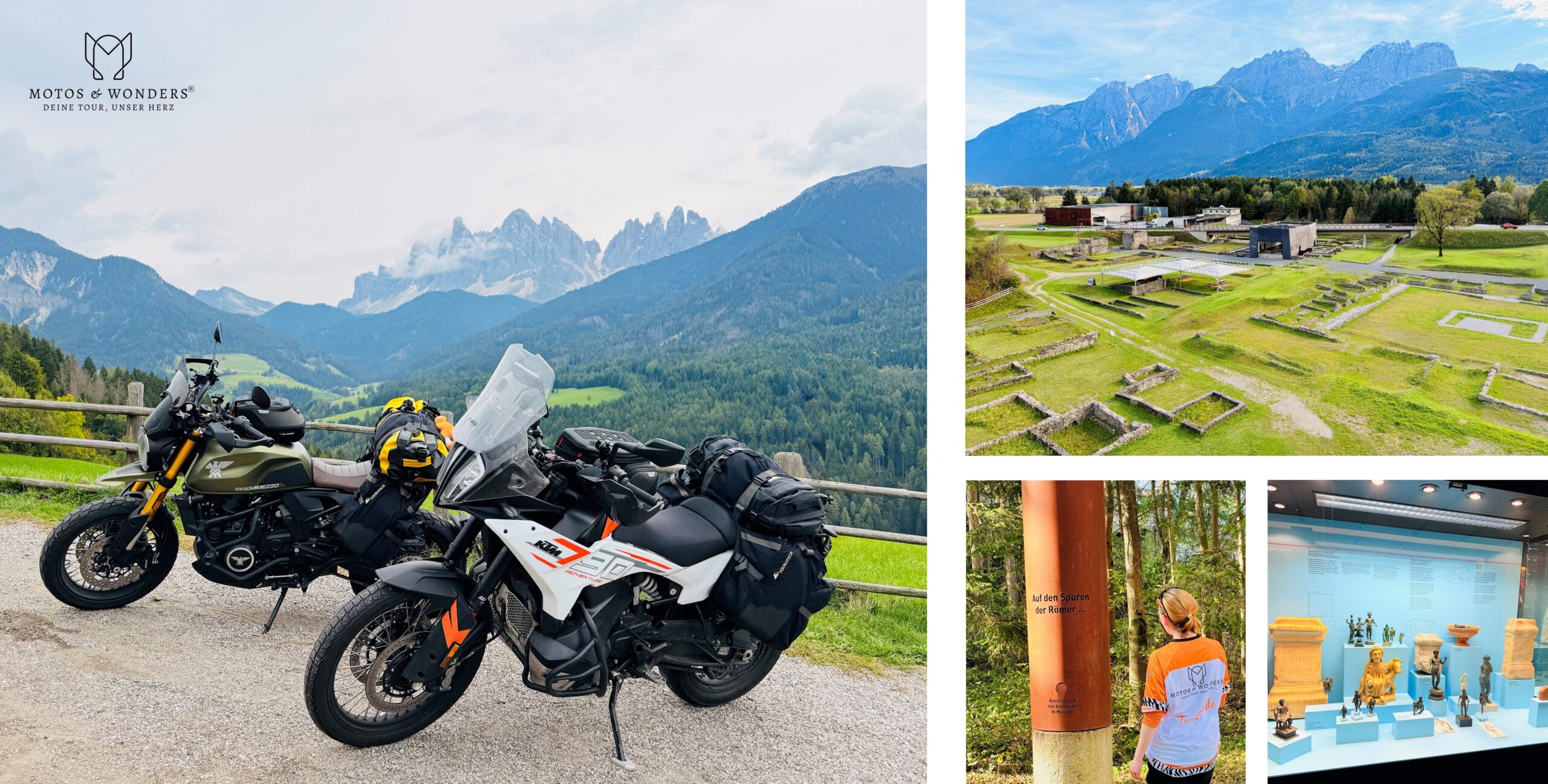
The morning brings the light of the Dolomites: that bright, chalky white that seems almost unreal. We drive through the Villnös Valley and immediately sense: this isn’t just about ‘beautiful mountains’. It’s also about identity. For it is in these Dolomite valleys that the Ladins live – a Rhaeto-Romanic minority with their own language and culture, which remains visible and audible to this day.
That is precisely why we stop in San Martino in Badia at the Museum Ladin (Ciastel de Tor). Behind the castle walls, Ladin is not presented as folklore, but as living history: language, everyday life, crafts, traditions – and how a valley preserves its independence.
And then there’s this little, personal bonus: the Villnös Valley is also the valley where Reinhold Messner grew up – and where his love of rock and altitude began at an early age. When you see these walls, you believe it straight away.
Before we continue our journey towards Carinthia in Austria, we take time for a detour to Aguntum, the ruins of a Roman town near present-day Dölsach. Amidst the remains of roads, temples and houses, it is easy to imagine the rhythm of daily life two thousand years ago. The stones are silent, yet they tell of trade, community and ambition – and of how human history is deeply rooted here, long before the surrounding mountains became a playground for mountaineers and adventurers. A quiet moment that adds another layer to the landscape and connects past and present as our journey continues.
Day 3 – Over the Wurzen Pass to Slovenia, Triglav National Park & Bled
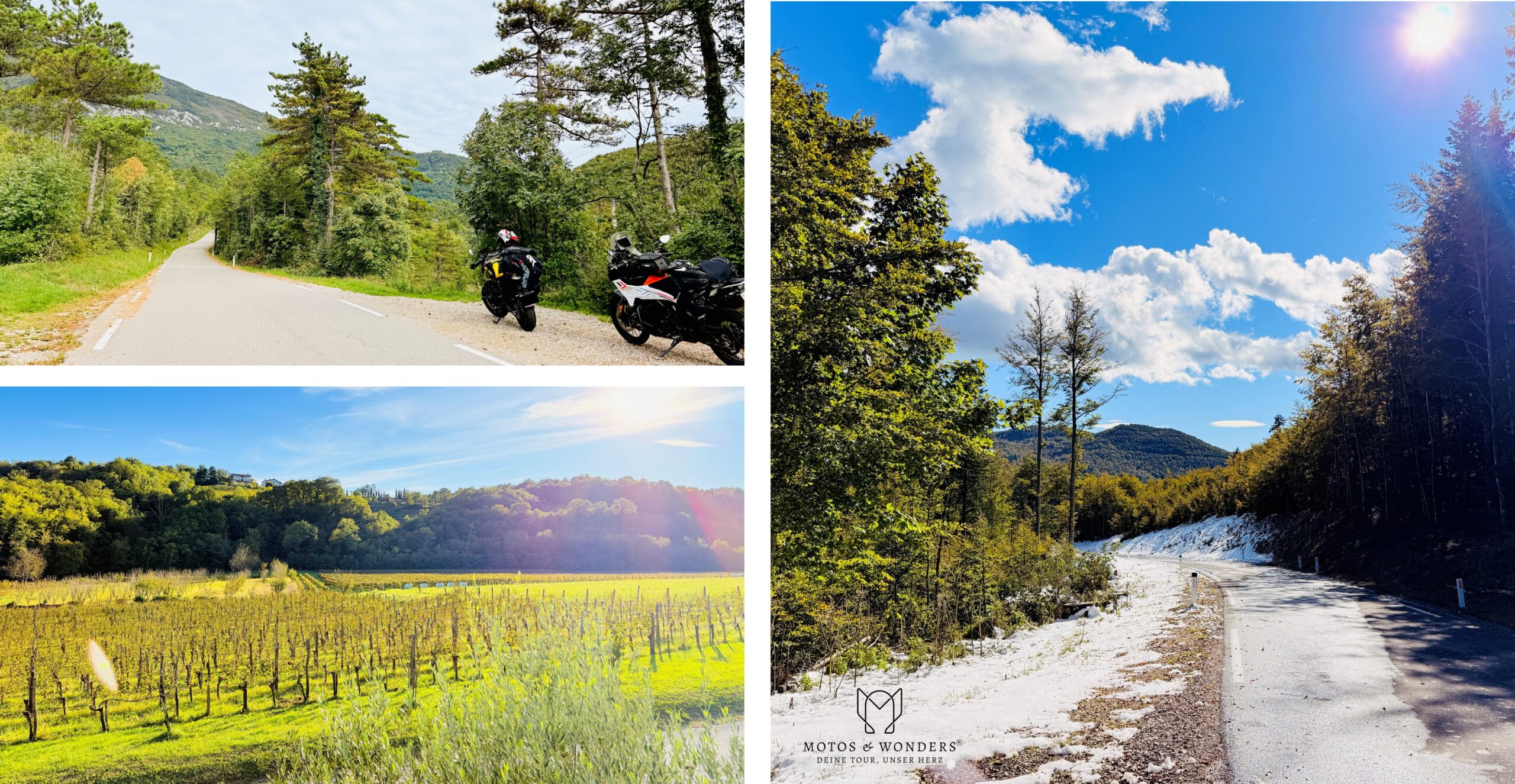
At some point, the world shifts into a new chapter. We wind our way over the Wurzen Pass (Korensko sedlo) into Slovenia – steep, winding, and exactly the right ‘transition moment’ not just to arrive, but to roll right in.
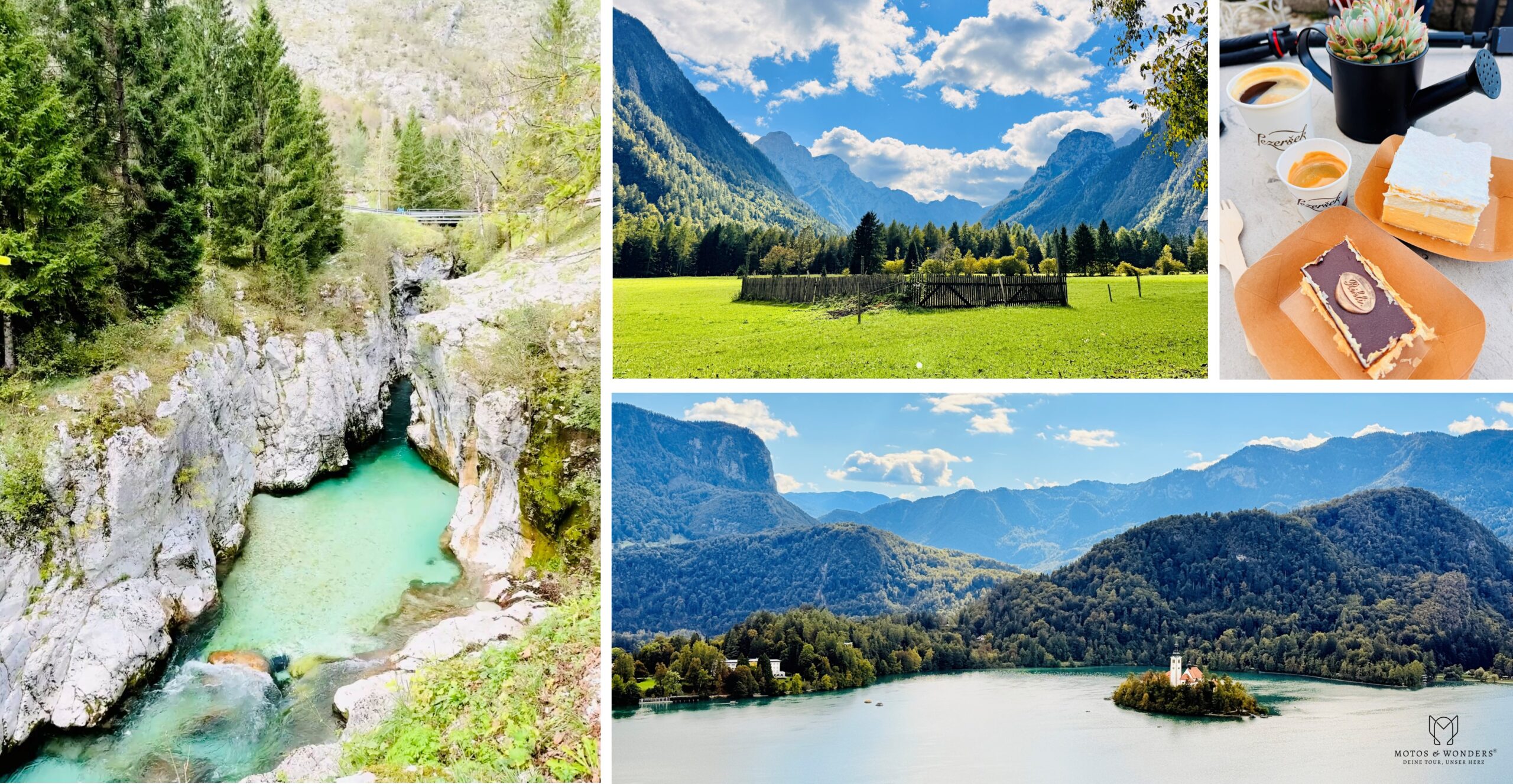
In Triglav National Park, everything looks as though it’s been freshly washed: clear streams, cold air, lush greenery. And because the Vršič Pass didn’t work out for us, we improvise – and are rewarded. Slovenia has this rare quality where Plan B feels like a bullseye.
At the end of the day, Bled awaits. Yes, it’s well-known. Yes, it’s popular. But it remains impressive. The path up to the castle is a little ‘wow’ moment every time: Bled Castle perches on the rock above the lake and offers a view that briefly takes your mind off everything. Inside, things get really exciting: at the Bled Castle Museum, you’ll discover not only the castle’s history but also archaeological and prehistoric finds, as well as insights into the region’s early settlement.
And because Slovenia likes to go the extra mile, here’s a perfect prehistoric fun fact: The famous Divje Babe bone flute was found in Slovenia – often described as one of the oldest ‘instruments’ in the world. At the same time, this is scientifically disputed (flute vs. animal bite marks). It is precisely this ambiguity that makes it so fascinating: history is rarely neat and tidy.
Day 4 – Kropa, memorials along the way & then the Adriatic: Piran and the salt
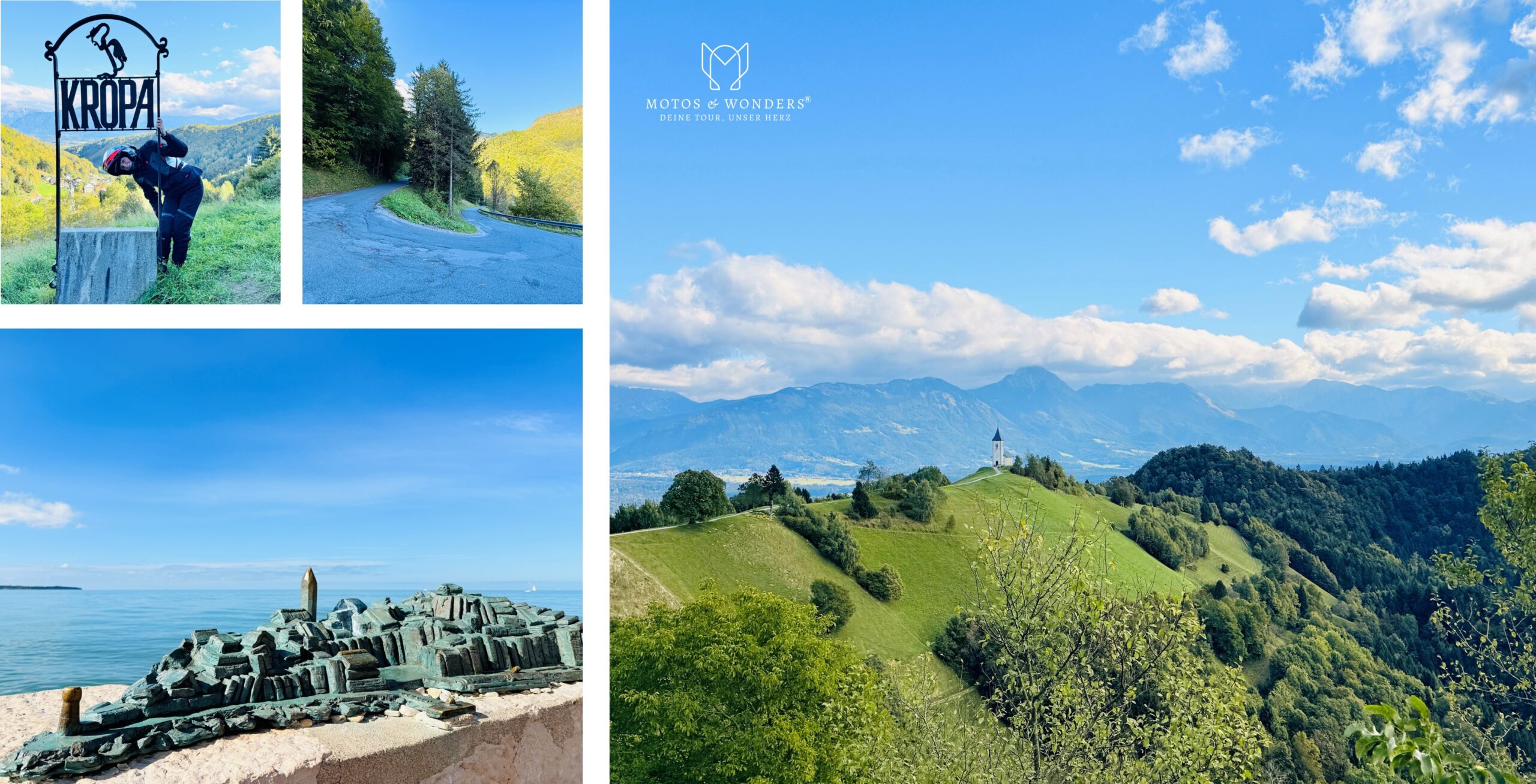
The mountains recede, giving way to hills, and the light grows softer. We cycle through Kropa – a village with a rich history of craftsmanship: iron, blacksmithing, nails – work that has set the pace of the village for centuries. But Kropa is not just ‘craft-wise charming’. Along this route, one encounters reminders time and again: memorials, plaques, monuments – the First and Second World Wars in particular have left their mark on many regions. You cycle through beautiful countryside here, but you also cycle through a country that has learnt not to hide its history.
The coast feels like a change of scene. With its Venetian architecture, narrow streets and seagulls hovering over the water, Piran seems like a different chapter of the journey. Tartini Square stands out in particular: once the inner harbour, today the heart of the town. Everything has a Mediterranean feel – and yet beneath the picture-postcard charm lies a second, very real foundation: salt.
Nearby are the Sečovlje salt pans, where salt is still harvested in the traditional way to this day. This makes Piran not only a beautiful seaside town, but also one with close historical ties to a centuries-old history of salt production and trade.
Day 5 – Vipava Forest & Goriška Brda: an award-winning wine region between the Alps and the Adriatic
Back into the hinterland: narrow forest roads, steep climbs, silence – and then the landscape slowly opens up towards Goriška Brda (Brda). These hills feel like a ‘Slovenian Tuscany’, but without that sense of being a copy: more rugged, more of a borderland character, and that special light caught between the Alpine air and the warmth of the Adriatic.
And yes: Brda is not only beautiful, but also a major player when it comes to wine. The region is considered one of Slovenia’s best-known wine-growing areas and has also gained international recognition – not only for its robust wines, but also as a destination where wine, cuisine and landscape come together.
That is precisely why an evening with a local winemaker here is so perfect: you’re not just ‘sitting over a glass of wine’, you’re in a region that has earned its reputation – yet has remained down-to-earth.
Day 6 – Slovenian Mountain Ridge Road & Soča Valley: panoramic views, the emerald river, history
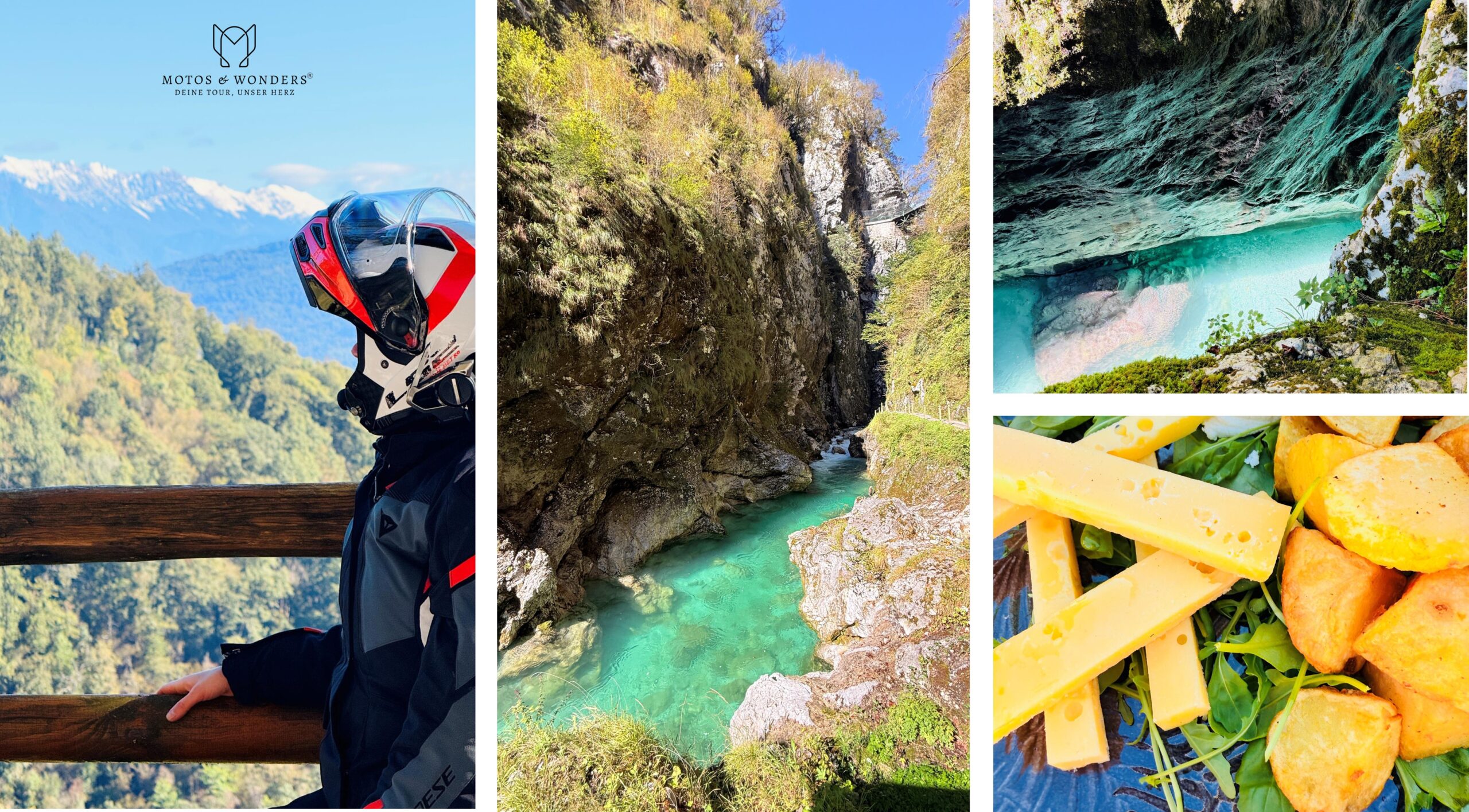
Today promises to be spectacular. In the morning, the route takes us onto the Slovenian border ridge road – a high-altitude road offering sweeping views, fresh air and open space, where you automatically find yourself speaking more softly inside your helmet. We then glide down into the Soča Valley, and the Soča is truly a natural phenomenon: emerald to turquoise, almost unreal depending on the light.
At the same time, the valley is a history book: this is where the Soča/Isonzo Front ran during the First World War. Beauty and remembrance lie close together here – and that is precisely what makes this region so intense.
We stop at the Tolmin Gorge, where footbridges lead through the rock, the water flows ice-cold and the air feels noticeably different – as if the valley had its own microclimate.
The weather throws a spanner in the works and keeps the Mangart Panorama Road out of reach, yet the day loses none of its intensity. Still filled with the colours of the Soča, we continue our journey over the Predil Pass towards Tarvisio.
Day 7 – Return journey via South Tyrol and Lake Braies: beautiful, but a tourist hotspot
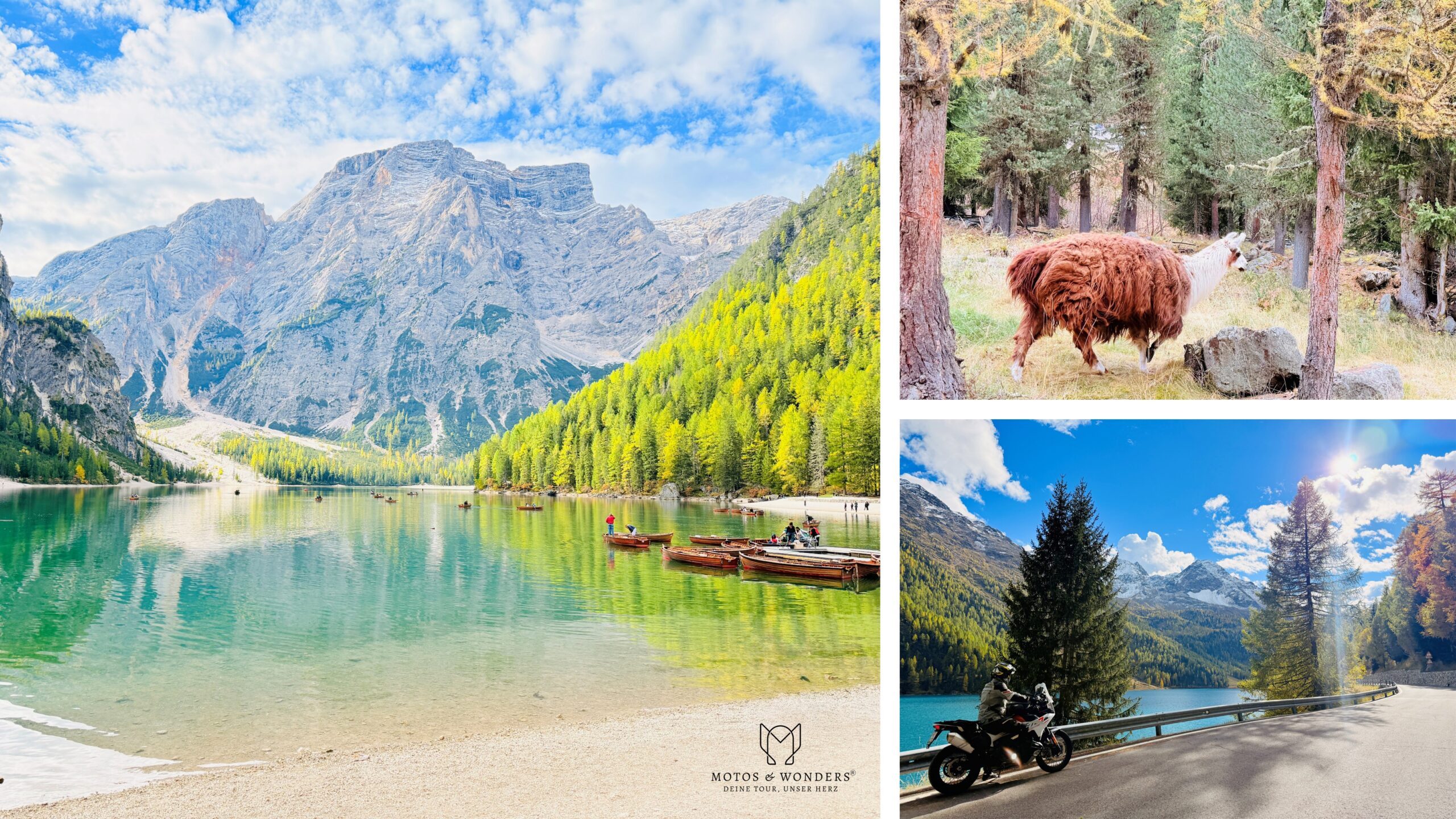
Lake Braies is, without a doubt, breathtakingly beautiful: turquoise, framed by the Dolomite walls, and as photogenic as they come. But that is precisely why it is such a tourist magnet. We take a moment to say, “Yes, it really is beautiful” – and then deliberately ride on. For us, motorcycling isn’t about “queuing up for a view”, but about movement, flow and the open road.
Our final night takes us back to South Tyrol, to the Martell Valley – the Beerental. Martell is famous for its strawberries, and we’re in luck: we get to taste the very last strawberries of the season. After days full of bends and impressions, it’s such a small, perfect finishing touch.
Day 8 – Müstair, Charlemagne & a relaxing end to the trip on Lake Walen
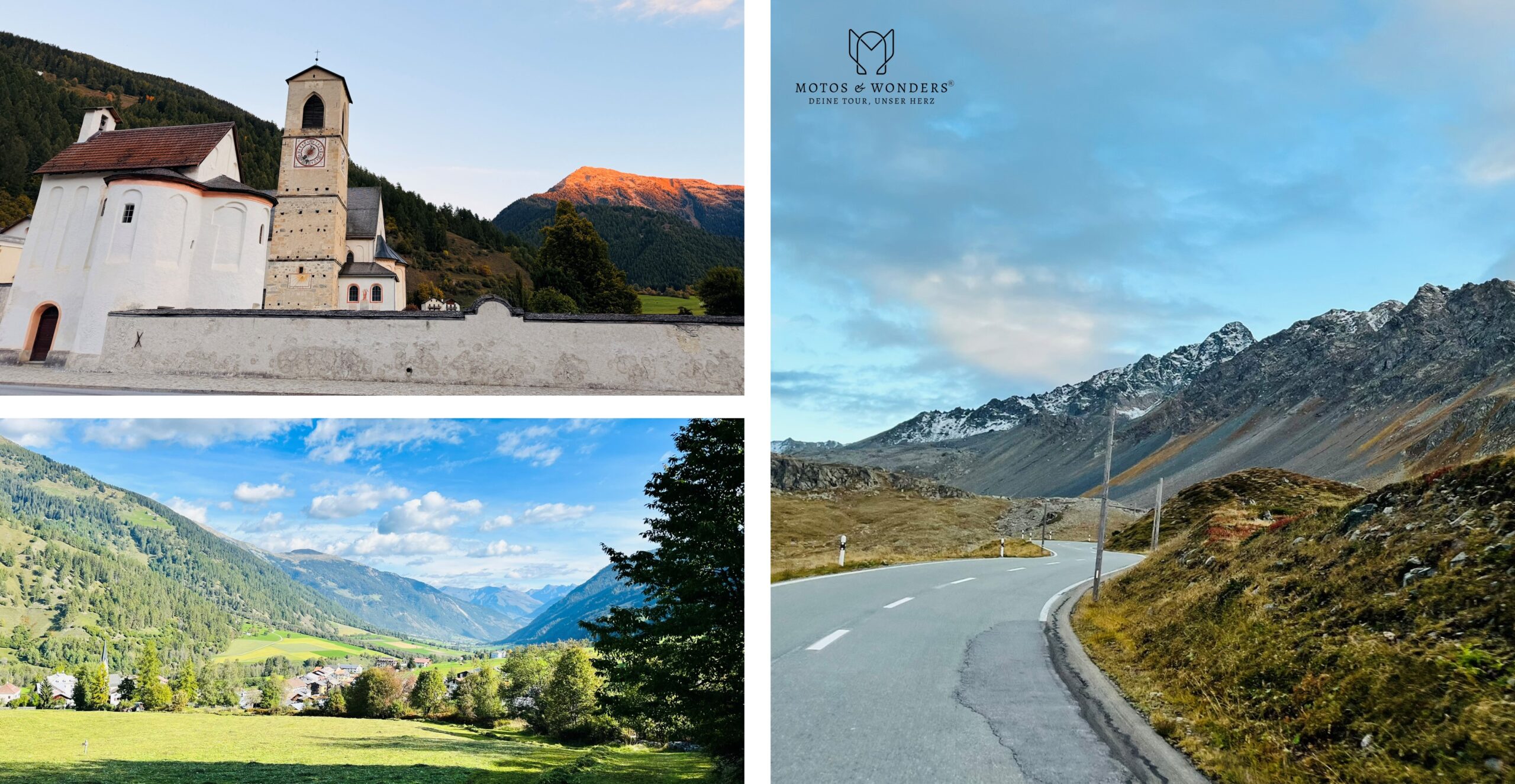
To round things off, a touch of culture that really touches the soul: in Müstair, we visit the Benedictine convent of St. Johann – a UNESCO World Heritage Site, founded around 775. The legend of its founding is almost cinematic: Charlemagne is said to have commissioned its establishment – and even if legends are just legends, you can really feel on the spot just how ancient and significant this corner of Europe is.
Afterwards, we head home via Müstair, the Ofen Pass and the Flüela – and finally, we round off the day at Lake Walen. Water, mountains, evening light. Our helmets lie beside us, our thoughts still somewhere between the turquoise waters of the Soča and the narrow streets of the Adriatic. This is exactly how a tour should end: peaceful, content, happy.
In conclusion – freedom, bends and unforgettable memories
A motorbike tour from the Alps to the Adriatic is more than just a scenic route. It combines winding mountain passes, stunning landscapes, historic sites and regional character to create a journey that you don’t just ride, but truly experience.
It is precisely this blend that lies at the heart of Moto & Wonders: small groups, carefully chosen stops and the freedom to set your own pace. Slovenia is the perfect example of this – the constant alternation between mountains and sea, tranquil valleys, living history and moments of pure freedom. Each stage has its own character, and it is precisely this that creates a tour you will remember for a long time to come.
Would you like to give this experience as a gift? Our gift voucher is the perfect idea for motorcyclists. 🎁
